Completed
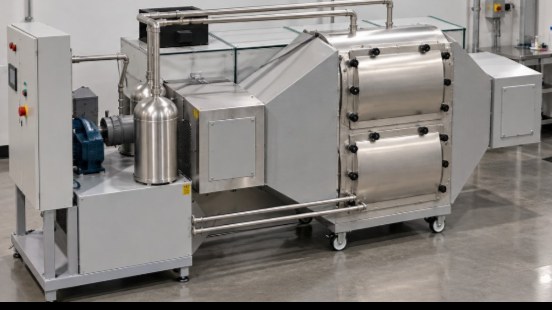
Pilot-1
A small pilot built around a functional sorbent formulation and specially designed filter modules, assembled and tested in the factory. The results underpin the commercial design.

Act as a tree. Save energy.
acDAC12 turns the air-handling system a building already has into a carbon capture platform: CO₂ is captured from the incoming air, indoor air gets cleaner, and the AHU uses less energy.
A Qatar-based clean-tech company. Developed at Hamad Bin Khalifa University, based at Qatar Science & Technology Park, Doha.
CP-1 commercial configuration
Current planning figures for the CP-1 commercial configuration, subject to actual operating performance and availability. Validated results will be published as the deployment programme progresses.
Who we are
acDAC12 is a Qatar-based clean-tech company developing innovative Direct Air Capture technology integrated into existing building HVAC systems.
Our solution transforms air-handling infrastructure into carbon capture platforms, while targeting improved indoor air quality and reduced HVAC energy consumption. The captured CO₂ is recovered and supplied to off-takers such as greenhouses, food and beverage producers, and industrial customers.
Standalone direct air capture plants need land, fans and energy of their own, which has kept carbon removal slow and costly.
Sealed, air-conditioned buildings pull in large volumes of outdoor air all day, and CO₂ builds up inside wherever people gather.
A solid-sorbent capture module on the outdoor-air intake of the AHU. The air the building already moves does the work, the CO₂ is collected rather than released, and the air supplied inside is cleaner.
Technology
The module sits on the outdoor-air intake, ahead of the air handling unit. Air passes through it on its normal path, and the CO₂ is captured and collected in five steps.
Outdoor air is drawn in at roof level, before it reaches the air handling unit.
A specially designed solid-sorbent filter module holds the CO₂ and lets the air through.
CO₂-lean air continues into the AHU and is cooled and supplied to every floor.
A separate regeneration circuit releases the captured CO₂ and collects it, rather than returning it to the air stream.
The recovered CO₂ is supplied to off-takers: greenhouses, food and beverage, and industry.
Specifications
Our commercial configuration is sized for integration with a standard air handling unit. The small pilot validated the sorbent and filter modules; CP-1 scales them up.
| Integration | Outdoor-air intake of an existing AHURetrofit, no new land or building |
|---|---|
| Air-handling capacity | ~24,000 m³/hourper module |
| CO₂ capture rate | ~8.5 kg/hourper commercial module |
| Indicative annual capture | ~55.8 t at 18 h/day~74.5 t at continuous 24-hour operation |
| Capture medium | Solid-sorbent filter modulesFunctional sorbent formulation, specially designed contact modules |
| CO₂ handling | Separate regeneration circuitCaptured CO₂ is released, collected and recovered for supply |
| Indoor air quality | 50–60% lower indoor CO₂current planning target |
| AHU energy | ~10% saving per AHUcurrent planning target |
Planning figures for the CP-1 configuration, based on the latest commercial planning information. Subject to actual operating performance and availability. Detailed process conditions are available to qualified partners under NDA.
How it behaves in a building: a live schematic of one module on a tower, from outdoor intake to collected CO₂, with indoor CO₂ and AHU energy readouts.
Applications
Wherever outdoor air is conditioned and supplied to people, an acDAC12 module can capture CO₂ on the way in.
Towers and mixed-use developments with large central AHUs and high occupancy.
Guest comfort, cleaner indoor air and a measurable sustainability story for every stay.
Lower indoor CO₂ for the people who work there, with the AHU doing the capture work.
Facilities where indoor air quality matters most and ventilation runs around the clock.
Large air volumes and on-site demand for the recovered CO₂.
Capture on the air intake and supply the recovered CO₂ straight to the crops.
The captured CO₂ is recovered and supplied to customers who use it every day, turning a building's air handling into a source of a useful product.
From research to deployment
The technology grew out of research at HBKU's Qatar Environment and Energy Research Institute. A working pilot has been built and tested, and the first commercial project is now in tender.
A small pilot built around a functional sorbent formulation and specially designed filter modules, assembled and tested in the factory. The results underpin the commercial design.
The commercial configuration, sized for an AHU handling around 24,000 m³/hour, is currently in tender. First installations are planned for Doha Tower and the HBKU Research Building, targeted for the end of March 2027.
To develop and commercialize energy-efficient DAC technologies that integrate CO₂ removal into buildings and industry, improve indoor air quality, and enable sustainable CO₂ utilization, contributing to a cleaner environment and a low-carbon future.
To become a global leader in integrated DAC solutions, transforming buildings and industry into platforms for carbon removal while positioning Qatar as a hub for DAC innovation and manufacturing.
Qatar National Vision 2030
acDAC12 supports all four pillars of the national vision, and positions Qatar as a home for climate technology and manufacturing.
Healthier indoor environments for the people who live and work in Qatar's buildings.
Buildings that capture carbon while using less energy, supporting national climate goals.
A home-grown clean-tech company creating high-value jobs and a new supply of CO₂ for local industry.
Partnerships with leading institutions that show regional leadership on climate.
Updates
Updates will appear here.
Team
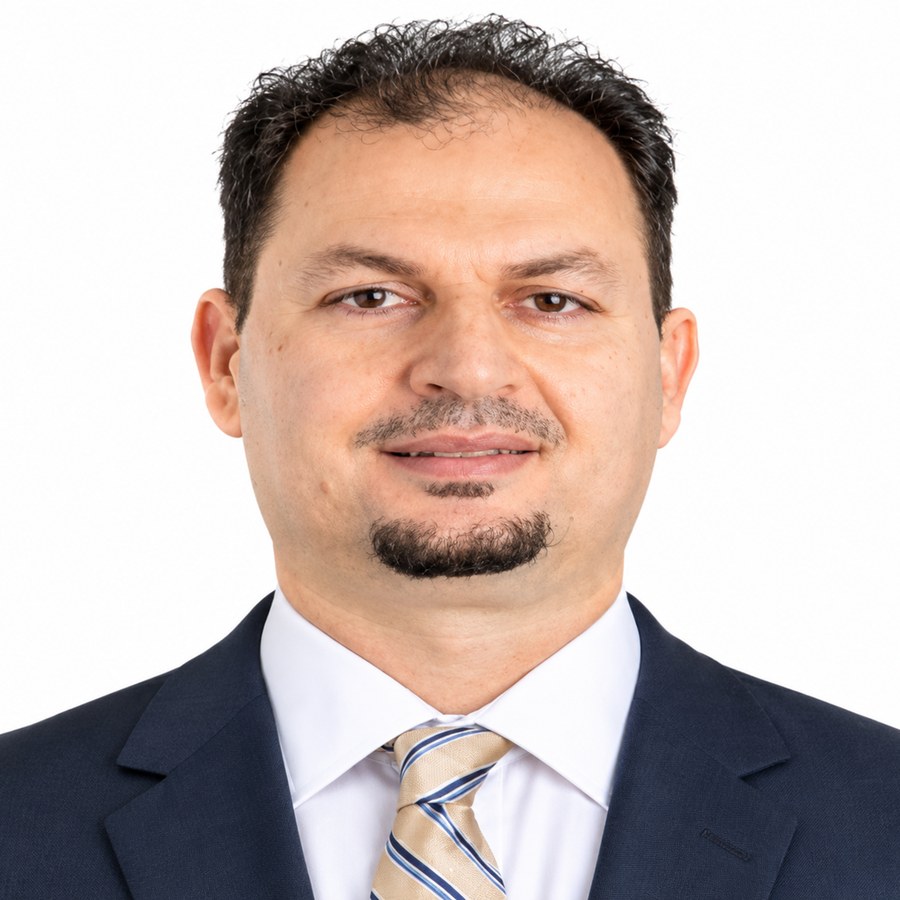
Founder & Chairman
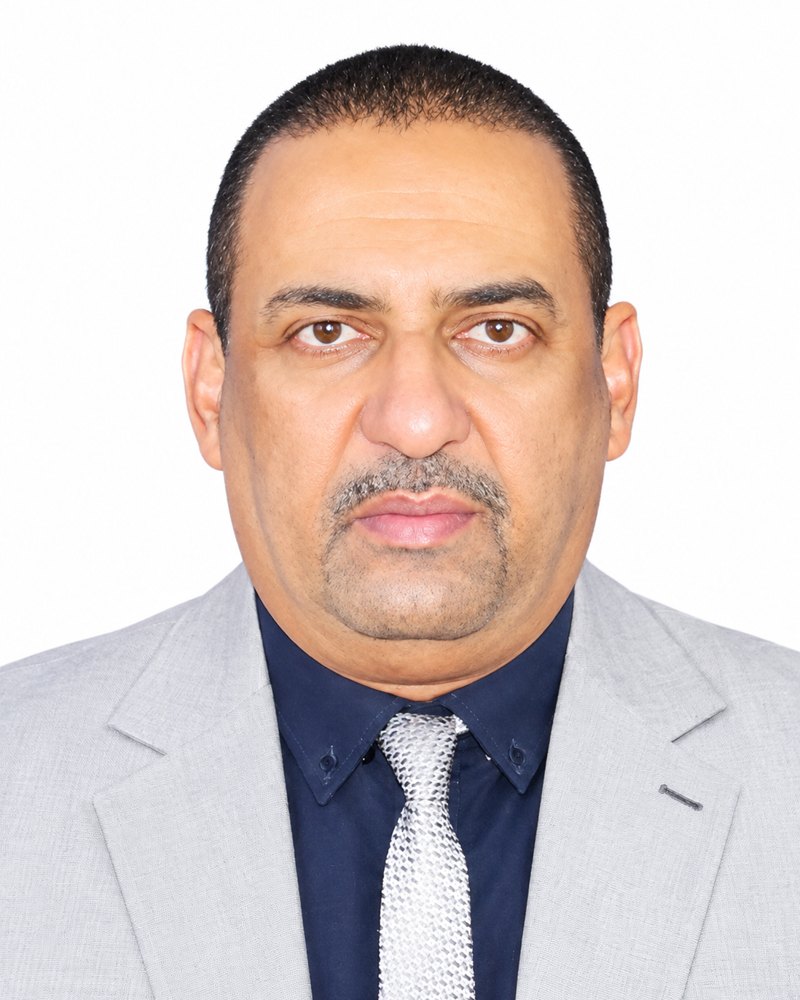
Chief Executive Officer

Technology Development Director & CTO
We are moving from pilot validation to commercial deployment, starting in Qatar as a gateway to the GCC. We're talking to building owners, HVAC partners, CO₂ off-takers and investors.
Start a conversationNo. The module integrates with the outdoor-air intake of the AHU you already have. The AHU keeps cooling and supplying air as before; it now receives CO₂-lean air.
The CP-1 commercial module is planned around 8.5 kg of CO₂ per hour, which is roughly 55.8 tonnes a year at 18 operating hours a day, or 74.5 tonnes at continuous operation. These are current planning figures, subject to actual operating performance.
A separate regeneration circuit releases and collects it, so it is recovered rather than returned to the air stream. It is then supplied to off-takers such as greenhouses, food and beverage producers and industrial customers.
A small pilot, Pilot-1, has been built and factory-tested. The first commercial installations, at Doha Tower and the HBKU Research Building, are in tender and targeted for the end of March 2027.
The sorbent formulation and the detailed regeneration and CO₂ handling conditions are proprietary. Process diagrams and specifications are available to qualified partners under NDA.
Contact
Building owners, HVAC partners, CO₂ off-takers and investors: tell us about your project and we'll get back to you within one business day.
Qatar Science & Technology Park
Doha, Qatar
Sunday to Thursday, 8 AM to 5 PM (AST)